On craft, clarity, and getting fired in two weeks.
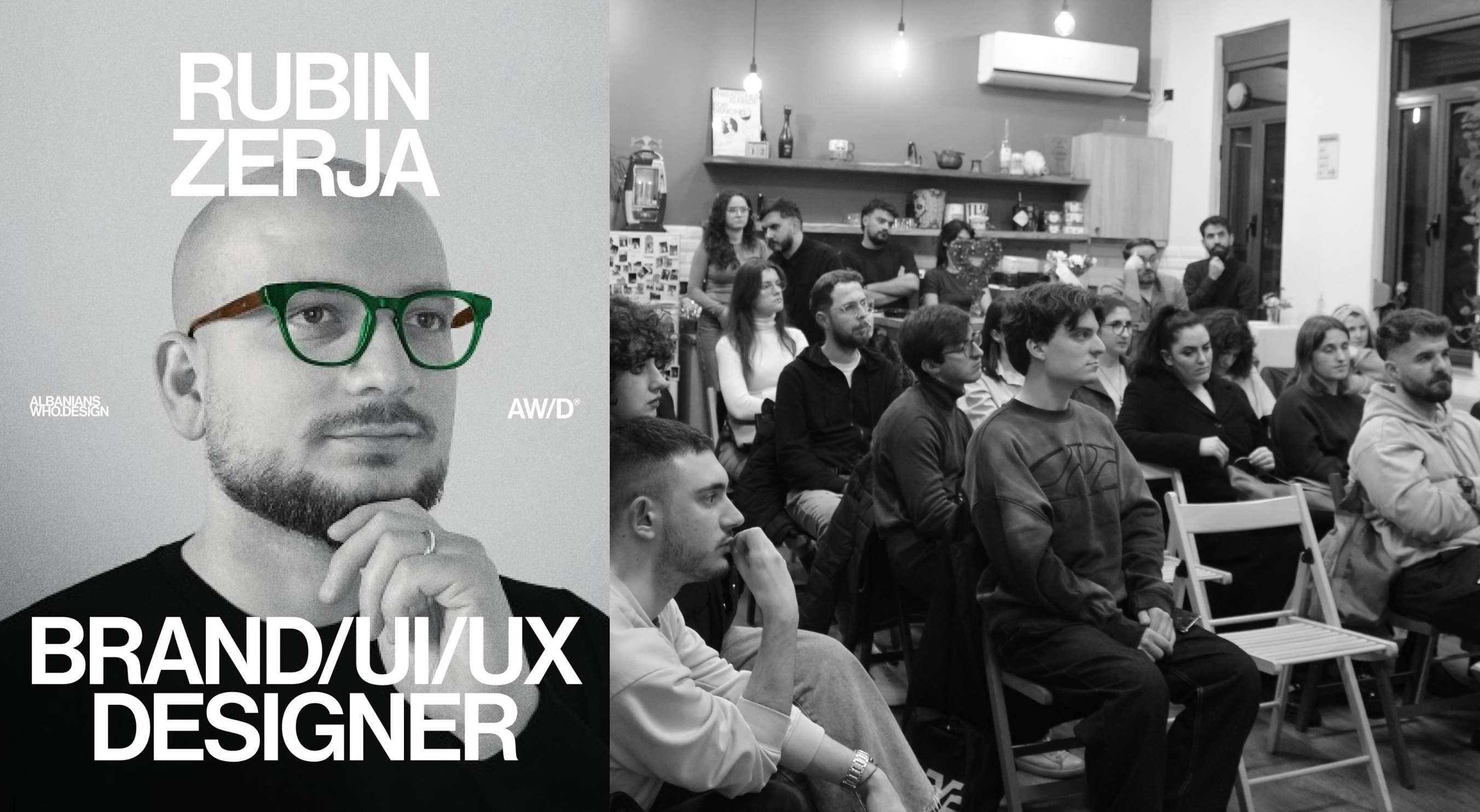
Two weeks into my first internship, my boss took me out for a coffee. She paid me for the two weeks, slid the money across the table, and told me: you're not for this. You don't deserve to get paid. I'm letting you go.
And the honest truth is, she was right. I was slow. Two weeks to design a poster. I would have fired myself. I knew it even then.
But I didn't take the money. I told her I didn't want it. I said: I need to learn. Please give me another chance.
She looked at me, and said: okay, let's go back to work.
Everyone around us was surprised. Nobody expected me to walk back in.Two years later, I was leading a team of four designers there.
I forgot to tell this story at the Albanians Who Design meetup in February. It was supposed to be in the presentation. But somewhere in the middle of a back-to-back day, I had been mentoring at another event earlier, I moved past it. I only noticed on the way home.
It bothered me a little. Not because the talk went badly, it didn't.But because that moment says more about how I think about the work than anything I actually showed on stage. It is not a story about talent. It is astory about not being willing to accept the version of yourself that isn't good enough yet.
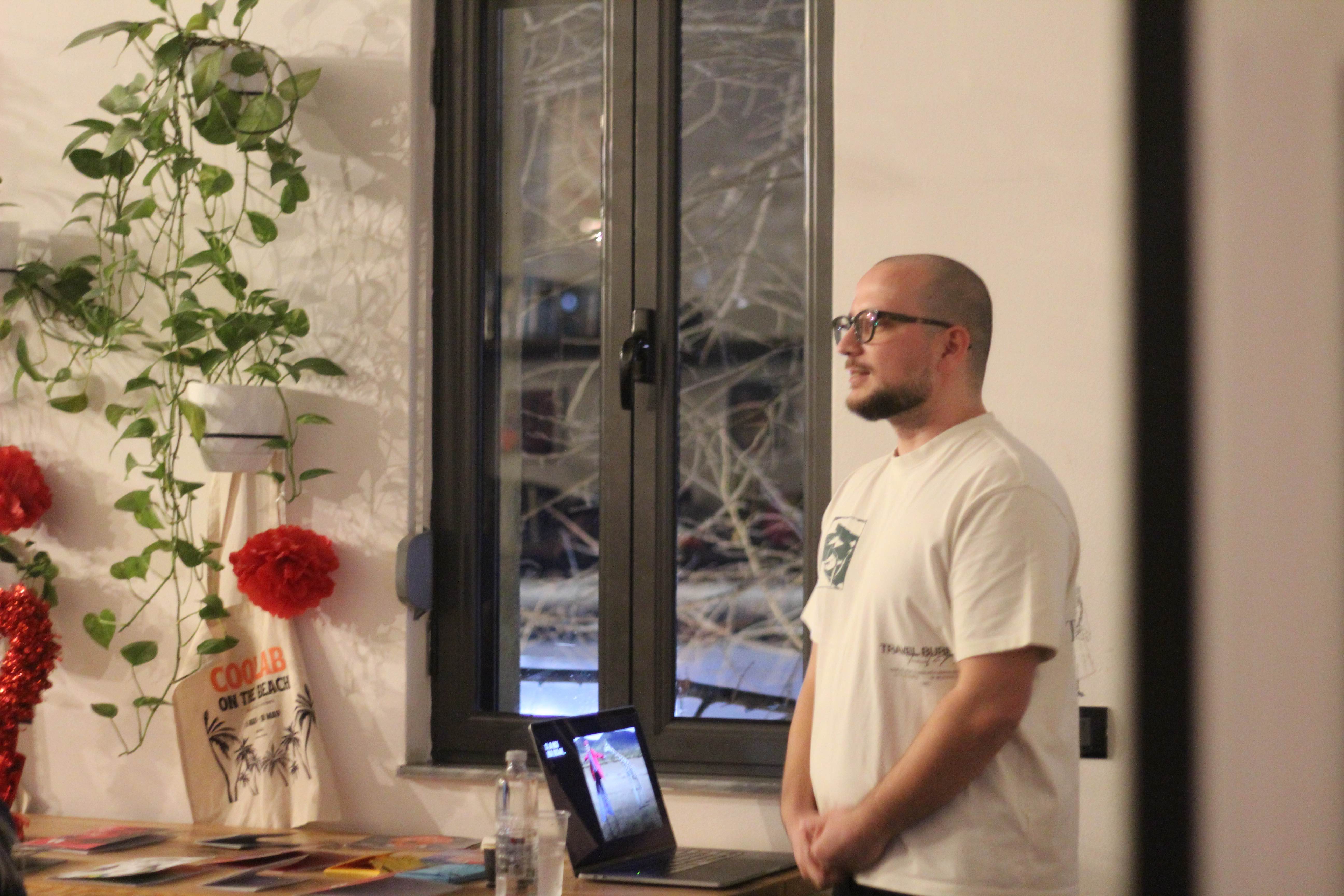
The Albanians Who Design meetups are an interesting format. There is no stage. Just a room, some people who care about the same things, and a kind of shared curiosity that makes you feel both comfortable and slightly exposed at the same time. Some faces I knew. Most I didn't. I was the second speaker, after Jolin Matraku, whose work I genuinely respect, which added a quiet kind of pressure that I think was good for me.
When you speak to clients, the work carries a lot of the weight. The visuals do something, the outcomes matter, and the conversation tends to stay at the level of impact and results. But when the room is full of designers, that changes. They are not there to be impressed by a finished product. They want to know how you got there. What you rejected. What you struggled with. What you actually believe about this work that is different from what everyone else says.
So I shared my story from the beginning, including the early work, which was genuinely bad. I showed it on purpose. Because I think the mythology around talent does a lot of damage. The idea that good designers were always good, that the work came naturally, that there was some early sign of genius. In most cases, including mine, that is just not true. Everyone is bad at the start. What separates people is not where they begin but whether they stay honest with themselves about the distance between where they are and where they want to be.
The philosophy I kept coming back to during the talk is one I have held for a long time, but it took standing in that room to articulate it clearly. Design doesn't have to do with me. Or at least, it shouldn't.
This sounds simple. It is not. It means that when I am working on something, my personal taste is not the point. Whether I like the direction is not the question. The question is whether it serves the purpose it was made to serve. Who is it for. What does it need to do. What should someone feel, understand, or decide differently because of it.
Removing yourself from the equation like that changes how you work. It makes it easier to kill ideas you are attached to. It makes feedback less personal. It makes the decisions cleaner because they are no longer about defending something, they are about finding what is actually right for the problem in front of you. Design as art is personal. Design as craft is not. I have always been drawn to the second one.
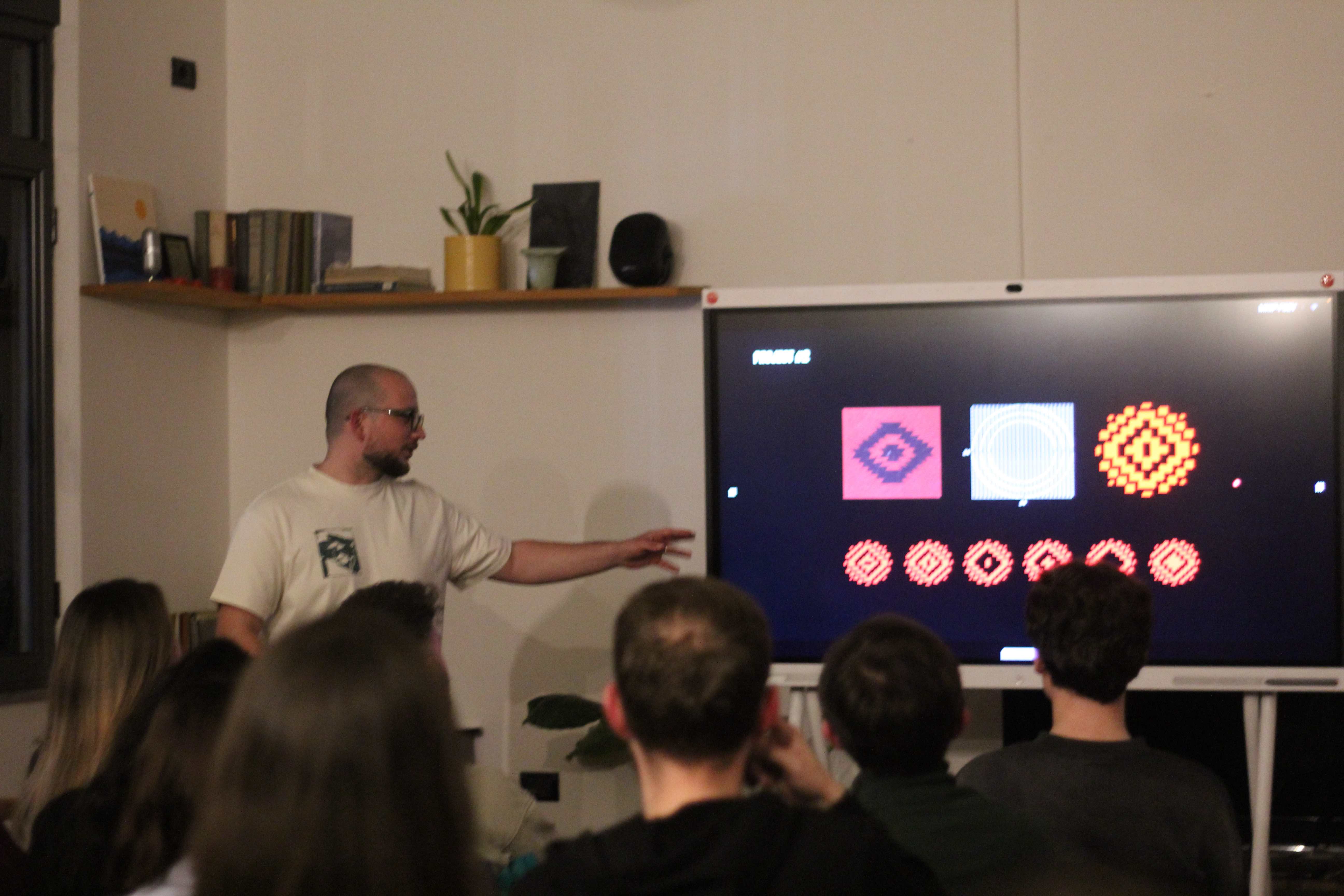
I showed three projects, Vetch Studio, Sphere, and Witway. They look very different on the surface. Different forms, different directions, different outcomes. But going through them in front of that room made something concrete that I had felt for a while but not said out loud: every project I care about comes down to the same thing. Not style. Not execution. Decisions. What to take. What to leave. What to push further and what to stop. That is where the work actually happens. Everything visible is just the result of those decisions.
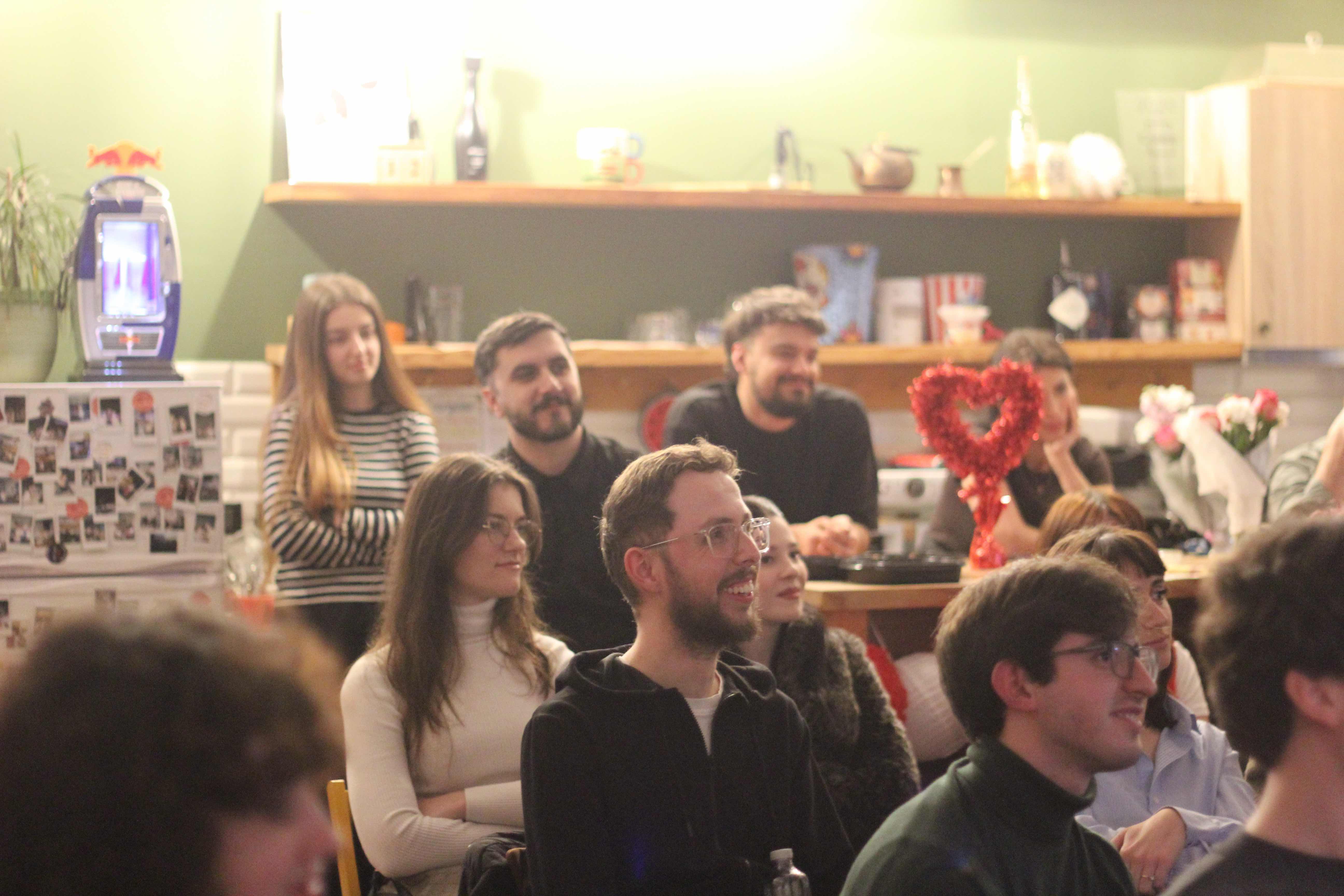
There was one thing that stayed with me after that night that I did not expect. Being there reminded me how much of my recent time has gone into the business side of things, the studio, the systems, the clients, the strategy. Which is necessary. But design is still the reason any of it exists. And somewhere in the middle of building the structure around the work, the work itself can start to feel like it is happening in the margins.
I am not sure that is fixable in a permanent way. It is probably just the tension you live with when you are building something. But naming it matters. Because the moment you stop noticing that gap is the moment the work starts to lose the thing that made it worth doing in the first place.
Speaking at that meet up did not change how I think. But it forced me to say the things I usually only think. And there is a difference between knowing something and having to articulate it to a room of people who will immediately sense if you don't mean it.
That night reminded me why I started doing this in the first place. Before the studio, before the strategy, before the business side of things took up most of the space, there was just the craft. The love of making something and caring deeply about whether it was right. Being in that room, surrounded by people who still live inside that feeling every day, made me want to find my way back to it. Not to abandon what I've built. But to remember what it was built on.
