Speed is not the goal. Quality is.

Somewhere between 70s- 80s, Toyota had a problem that didn't look like a problem.
Some teams on the production floor were crushing their targets. Cars out on time, numbers up, managers happy. Other teams were slower. They kept stopping the line. And in a factory, stopping the line costs money, real money, every minute.
The obvious move? Reward the fast teams. Push the slow ones.
Taiichi Ohno, the engineer behind the Toyota Production System, did the opposite. He went to the floor and watched. Not the spreadsheets. The people. And what he saw changed everything on how Toyota operates to this day.
The fast teams were hiding problems. A defect would show up and instead of stopping, they'd push it forward. Skip a step. Cover it up. Keep the numbers clean. The cars were leaving the line on time, but they were leaving with problems baked in.
The slower teams were doing something different. When a problem appeared, they pulled the andon cord. The line stopped. Everyone could see the issue. They fixed it and moved on. Their numbers looked worse. Their cars were better.
Ohno made a decision that nearly destroyed his career. He promoted the teams that stopped the line. He let go of the teams that hit targets by hiding defects.
The backlash was immediate. Managers complained. Executives questioned it. This felt wrong, you're rewarding people for slowing things down?
But the results came later. Less rework. Fewer recalls. Higher quality. Lower costs over time. Toyota became the global benchmark for manufacturing, not because they were the fastest, but because they built a system that caught problems before they became disasters.
The biggest risk in business isn't making mistakes. It's shipping them with a smile and calling it efficiency.
Now look at what's happening with AI.
Right now, across every industry, businesses are racing to implement AI. The pitch is always the same: speed, efficiency, democratization. Do more with less. Cut the team. Let the tool do the work.
Salesforce told their customers AI would replace sales teams. Klarna announced they replaced 700 customer service staff with AI and saved millions, then, a year later, started quietly hiring humans again because the quality of customer interactions had collapsed. IBM paused hiring for over 7,800 roles it expected AI to absorb. Companies across marketing, design, development, and copywriting are cutting the people who actually understand the work, replacing them with prompts and hoping nobody notices the difference.
And the AI companies selling these tools? They have a word for all of it: democratization. AI is democratizing design. Democratizing code. Democratizing creativity. Anyone can do it now.
That word is doing a lot of heavy lifting. And it's hiding a problem, exactly like Toyota's fast teams were hiding theirs.
Because here's what's actually happening: these companies are hitting their targets. Faster outputs. Lower headcount costs. Impressive demos. But underneath, the defects are building up. The brand that used to feel like something is now indistinguishable from every other AI-generated brand. The copy that used to connect with people now just fills space. The product that used to solve a real problem now just ships features. They pushed the problems forward. And the line kept moving.
Nobody pulled the cord.
Creativity was never about making something from nothing.
Before we talk about what AI can and cannot do, we need to be honest about something that most people in this conversation are afraid to say out loud.
Human creativity has never been purely original. It has always been a collage of things sorrounding us.
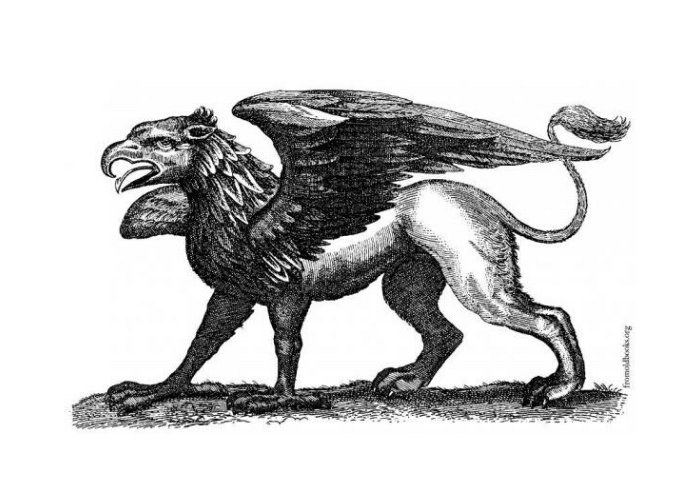
Think about where our most enduring myths and symbols come from. The dragon, one of the most powerful images in human storytelling across dozens of cultures that never met each other, is literally a lizard with wings. Two creatures that exist, fused into one that doesn't. The centaur is half human, half horse. The koi fish in Japanese mythology transforms into a dragon not through some mystical event, but through a visual illusion: when a koi jumps from the water, the splash surrounding it distorts the shape, and for a moment, it looks like a dragon emerging. The myth was born from a trick of light and water. From recombination. From seeing two things at once.
Even in dreams, the most uninhibited space of human imagination, neuroscience tells us something humbling: we cannot dream of faces that we have never seen. Every face in every dream is a face we have encountered somewhere. Our unconscious mind, even at its most free, is working from a library, not from thin air.
This is not a limitation. This is how human creativity actually works. We take what exists, we recombine it, we push it into new shapes, and then we do the thing that makes it mean something. We attach a story to it. We give it emotional weight. We make it resonate with other people. The koi and the splash become a story about persistence and transformation that has lasted centuries. The dragon becomes a symbol of power, wisdom, and fear that crosses cultures. The centaur becomes a meditation on the tension between civilization and nature.
The raw material was always borrowed. The meaning was always made.
And meaning is the reason why these stories have lived up to this day.
AI does the same recombination we do. The difference is it has no story to tell. No skin in the game. No understanding of why any of it should matter to anyone.
When AI generates a logo, a headline, a brand identity, a piece of copy, it is doing exactly what human creativity does at the surface level. It is pulling from everything it has seen and recombining it into something new. The output can look convincing to the untrained eye. Sometimes it even looks good.
But it doesn't know why. It doesn't know who this is for, what they are afraid of, what they are trying to prove, what keeps them up at night, what they need to feel when they encounter this brand for the first time. It doesn't carry the weight of the story. And without that, the recombination is just noise, sophisticated, well-formatted noise.
That's the gap that democratization cannot close. Giving everyone access to a recombination machine doesn't give them the judgment to know which recombinations mean something. That judgment, the ability to look at the output and say "this is right" or "this is wrong, and here's why", that comes from years of caring deeply about the work. From stopping the line when something is wrong. From understanding not just how to make a thing, but why it should exist at all.
There is more to this work than the output.
There is more to design than visuals. There is more to development than code. There is more to copywriting than words. There is more to branding than a logo and a color palette.
These disciplines are systems of judgment. Every decision what to include, what to remove, which direction to pursue, which to abandon, requires someone who understands not just the tool, but the problem. Someone who can stop the line when something is wrong, even when the pressure is to keep moving.
AI is a tool. A genuinely powerful one. But it belongs in the hands of people who already know what they're doing, because those are the only people who know when to use it and when to stop. The only people who can tell the difference between an output that looks right and one that actually is. The only people who can pull the cord.
Anyone can buy a hammer. But not anyone can build something worth living in.
The line always needs someone willing to stop it.
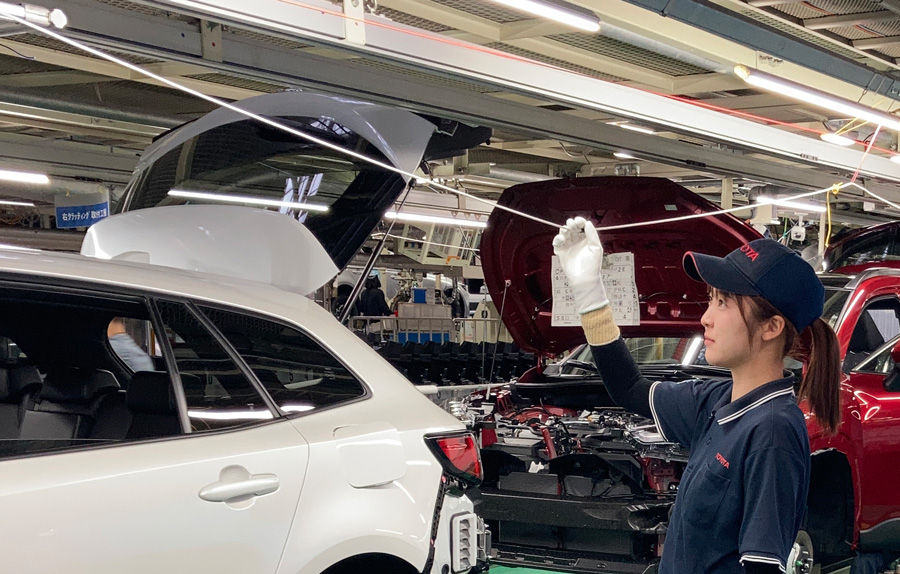
Ohno understood that a production system which never stops is a production system that never catches its own failures. The andon cord wasn't a sign of weakness, it was the mechanism that made everything else possible. The willingness to slow down, surface the problem, and fix it properly was exactly what separated Toyota from everyone else.
In knowledge work, in branding, in design, in development, the andon cord is the professional who says: this isn't good enough yet. The one who doesn't ship the defective version just because the deadline is close. The one who understands that speed without quality isn't efficiency, it's just a faster way to build problems you'll pay for later.
AI won't pull that cord for you. It doesn't know what good looks like in your specific context. It doesn't carry the weight of your client's problem, your market, your positioning, your story. It generates. Quickly. Confidently. And sometimes, completely wrong, with no way to know the difference.
The companies that rushed into AI without the systems, the oversight, and the people to manage it are already finding this out. They moved fast. The rework is coming.
Toyota became a global benchmark not by moving faster than everyone else, but by being the ones willing to stop when it mattered. Not because stopping felt good. Because they understood what was at stake if they didn't.
That principle hasn't aged a day.
How we think about this at STUDIOZ.
We use AI. We'd be dishonest if we said otherwise. It's part of how we research, how we explore directions faster, how we pressure-test ideas before committing to them. It makes certain parts of the process sharper.
But it has never replaced the judgment call. It has never been the one to decide whether something is right for a specific brand, a specific founder, a specific moment in a company's story. That part is still ours. It has to be.
Because branding is not a production line. There is no standard output. Every brand we build is a response to a specific problem, who you are, who you're talking to, what you need people to feel and believe when they encounter you. That requires real thinking. The kind that slows down when something feels off, even when everything looks fine on the surface. The kind that asks not just "does this look right?" but "does this mean something?"
We make the same kind of collage that human creativity has always made. We pull from what exists, we recombine, we push it into new shapes. But the story, the reason it should matter to someone, that's what we bring. That's what no tool can generate for you.
We pull the cord when we need to. Not because we're slow. Because we've learned what happens when you don't.
AI is the tool. We're still the craftsmen.
